I was a guest on
The Your Listener Podcast hosted by John Cuturilo. I thought our conversation was good.
Here is a link to the episode.
Audio
I had my microphone with me, but for some reason my audio doesn't sound very good. It probably had to do with the internet connection because the call was dropped once. John edited the conversation, but listeners will likely notice where the edit occurred. It was close to my explanation of economics.
Speaking Blunder
Economics is the study of people and choice, not capitalism. I miss spoke in the episode. I meant to say economics, but said capitalism. I was telling the story of how I was surprised when I learned that economics was the study of people and choice.
Introduction
Overall, I think I spoke well and represented ideas fairly. Below are data on welfare and poverty in the US. Below that is a couple quotes from Tomas Sowell.
Low tax and high social welfare was a topic mentioned. A few oil countries in the Middle East have zero personal income taxes to their citizens and provide high social welfare. These countries fund their social welfare with oil, but also have non government institutions that following Islamic customs Zakat (mandatory almsgiving) and Sadaqah (voluntary charity). (This information comes from Google's AI overview)
Poverty vs Social Welfare in the US
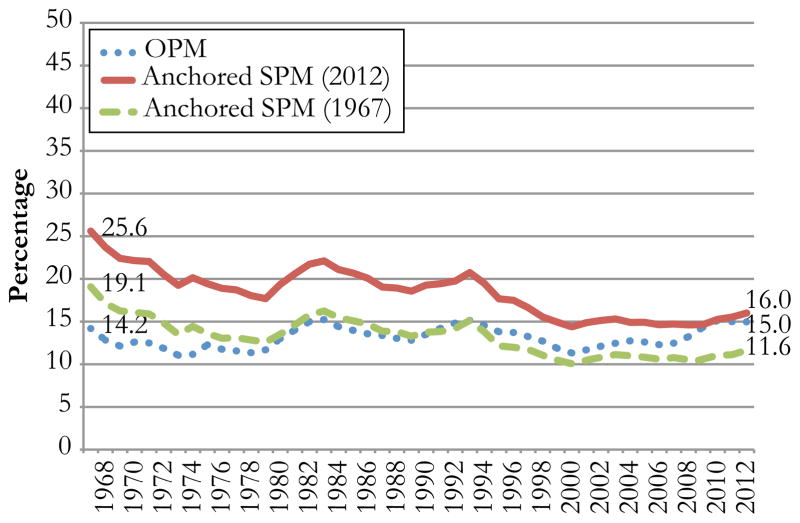
Even accounting for Supplemental Poverty Measure (SPM) (see below), the numbers are flat for the last two decades even though the spending has shot up the last couple decades.
Here is a look at social welfare spending adjusted for inflation.
"
Results indicate that unlike official statistics that have shown poverty rates to be fairly flat since the 1960s, poverty rates have dropped by 40 % when measured using a historical anchored SPM over the same period. Results obtained from comparing poverty rates using a pretax/pretransfer measure of resources versus a posttax/posttransfer measure of resources further show that government policies, not market incomes, are driving the declines observed over time."
Unemployment and Racism
The classic tragic example of that is minimum wage law. Employers are willing to offer wages, and workers are willing to accept them to get the job. But then third parties say, “No, that’s not a high enough wage.” And they will preempt the decision that both the employer and the employee have made and raise the minimum wage. The employer, though, not being a chess piece, decides he’s not going to hire as much labor as before. The result is you get huge amounts of unemployment, especially among black teenagers. When you raise the minimum wage, you get more job applicants because the higher wage attracts them. But there are fewer jobs because the employer finds ways of doing without low-skilled workers. So you end up with a chronic surplus of job applicants. And what that means is that it does not cost the employer anything to discriminate against minorities. For every qualified black he turns away, he has plenty of qualified whites to choose from in the surplus applicant pool.
"Minimum wage laws have had a devastating effect in making black teenage unemployment several times higher than it once was.
...The unemployment rate of black 16- and 17-year-old males was 9.4 percent. For white males the same ages, it was 10.2 percent.
...In later years, as the minimum wage was repeatedly raised to keep up with inflation, black teenage unemployment from 1971 through 1994 was never less than 3 times what it was in 1948, and ranged as high as more than 5 times the 1948 level. It also became far higher than the unemployment rate of whites the same age."