Friday, May 29, 2020

Rejected Reddit TIL Today

TIL=Today I Learned

TIL is a very popular reddit group with 22.9 million members as of today. The posts have a 300 character limit. You have to explain what you learned in 300 characters or less and provide a credible source.

The event described below was instantly rejected for multiple reasons. So I'll share it with the world here. This was my final revised and rejected:
TIL the blue mold floating in my expired protein powder water mix was a blue-green algae dietary supplement, spirulina. According to the US National Library of Medicine, spirulina is "POSSIBLY SAFE for people when used short-term," but "POSSIBLY UNSAFE" if contaminated.

Long story short


I spend 1-2 hours writing and revising versions of what I learned. The first draft wouldn't have been rejected, but it was too boring and trying too hard to make something trivial profound.

My wife was very annoyed at how long I was working on it. When I asked her for feedback, she brutally told me how boring it was. In adding a couple twists to my learning, I made the post personal which is a no-no, causing my learning to be rejected instantly.


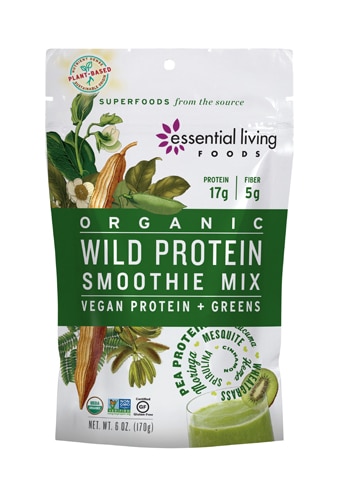
Essential Living Foods Organic Smoothie Mix Wild ProteinThe longer version


I have a very old plant based protein, Essential Living Foods Organic Smoothie Mix Wild Protein. It is an older bag than the picture on the right.

The protein taste terrible, so I never used it.

We are moving in a few days so I finally decided to finish the protein by drinking it with water all day.

My wife saw my water bottle and asked what is that?

It didn't look good. And because the protein is old we both thought mold even though the bag was still air tight and it smelt fine.

We both started searching the internet to figure out the blue floating substance. After repeatedly finding nothing, I grabbed and bag and started checking the ingredients.

Near the bottom of the list and foreign ingredient, Spirulina.

First searches identify the blue-gree algae as a super food who will save humanity someday.

Further investigation, trying to find a credible source for my TIL post, and I found warnings and lack of evidence for all the super food qualities purposed by supplement companies. Here is the full quote according to the US National Library of Medicine entry on Blue-Green Algae (also known as Spirulina):

When taken by mouth: Blue-green algae products that are free of contaminants, such as liver-damaging substances called microcystins, toxic metals, and harmful bacteria, are POSSIBLY SAFE for most people when used short-term. Doses up to 19 grams per day have been used safely for up to 2 months. Lower doses of 10 grams per day have been used safely for up to 6 months. Side effects are typically mild and may include nausea, vomiting, diarrhea, abdominal discomfort, fatigue, headache, and dizziness.

But blue-green algae products that are contaminated are POSSIBLY UNSAFE. Contaminated blue-green algae can cause liver damage, stomach pain, nausea, vomiting, weakness, thirst, rapid heartbeat, shock, and death. Don't use any blue-green algae product that hasn't been tested and found to be free of microcystins and other contamination. 
I have been aware of the health industries ability to create and make up all these marketing scams and fads to trick people into purchasing their products, but still, it is always funny how health products can almost say whatever they want because there is no incentive to disprove and or checks in balances in place.

Conclusion


Supplements are not replacements for a healthy diet, and don't worry about the floating blue stuff in your protein mix. It's POSSIBLY SAFE!

Friday, May 1, 2020

Should a Sixteen Year Be Able to Intentially Choose to Have a Child

Background


My buddy Brian was talking about a patient he had who was 16 years old. She recently had a nexplanon, birth control, put in a few months prior. The birth control requires a surgery, so she returned to get it removed. Her intentions were to have a baby and start a family. After 3 hours of counseling her and trying to convince her to keep the nexplanon, the nexplanon was removed. There were several concerning issues with this young woman becoming a parent. But my argument is that no 16 year old should have a child.

I'm biased against people having kids in general. I think the population is too large and all life of Earth would benefit greatly by people having fewer and preferably no children. With that said, my wife and I do have a child from an unplanned pregnancy. So yes, I am a father telling other people to not have their own children. And yes, I see the irony and hypocrisy in the my actions vs my beliefs.

I'm considering this as a philosophical question. Although I would support laws and policies to prevent people from having offspring, I'm not presenting a policy or legislative act.

Side note, I'm referring to modern American society more specifically, and western society generally. My ideas might change in other societies and cultures. For example, in a hunter and gather tribe, 16 might be a great age for motherhood. Or, in the future, I could see 16 year olds being more mature, intelligent, and educated, so they might be better prepared for motherhood too.

In a group meet hangout, Brian explained his experience and asked our opinions. Here is my opinion after thinking about it more.

My Stance


Hell no!

A 16 year old having a child is a bad idea. Even a responsible 16 year old with straight As, a full time job, and a multi-million dollar trust fund is abad idea. That 16 year old should finish school and go live her life. She is going to change a lot over the next decade, and an older, wiser, woman will be a much better and informed parent.

Our society has stages in adolescence and adulthood that make it almost impossible for a 16 year old to raise a child without significant help from their parents or family. There are going be so many obstacles for a 16 year old with a child and those obstacles will effect the child negatively.

16 year olds have sex, get pregnant, and give birth. I get that. A 16 year old getting pregnant and having a child is different from a 16 year old actively trying to get pregnant.

I don't think every 16 year old should be forced to have an abortion either, although I would support each of their choices to get an abortion.

I'm not sure how a policy could stop people from getting pregnant or avenge kids, but as I mentioned I don't think 16 year olds, or teenagers in general, should have children in their teens.

My main reason is personal liberty.

Personal Liberty


I love freedom. As an individual, I want 100% personal freedom to do whatever I want. I don't need or want a government or people telling me what do to with my life.

But as a member of society, I do not want others to have 100% personal freedom to do whatever they want. Other people's choices affect me and society. And since I do not want to be affect by other's choices, I am willing to give up some, or maybe lots, of my personal liberty.

Let's look at a more extreme example. What if a 16 teen year old wanted to kill a person? People all agree she can't do that. That affects the person she kills, the person's family, plus it puts others at risks and in danger during the act of killing.

But killing is the opposite of giving birth. Yes, but the birth will affect society too. I didn't research this, but I'm confident the data wouldn't look good for life expectancies for children of 16 year old mothers vs children of 26 year old mothers. There is probably great data on parents who have kids 10 years about to prove this. I'll look it up later and share it.

I also know there are too many variables to accompany age. Education, income, drug use, and being a single parent are probably great indicators of a child's future life expectancy.

It is possible that a 16 year old, well educated, full time worker, proper family and community support, who wanted the child, wouldn't have significantly better life expectancies. In that case studies might show a parent's age is less important than other factors. But still that potential child would have better life expectancies with those same proper support from parents who are older and wiser. That 16 year old would certainly be in a better position later in life, pending an extremely unlikely accident.

Let's look at a 16 year old like the one Brian was counseling. This young woman had a lot of concerning factors. She lacks the family support. She lacks the financial support. She is a liability to society. Her child and family are going to cost society. The 16 year old is going to need welfare to support and raise her child until the child can go to school at least. The chances of this family being on welfare will be among the highest demographics. The 16 year old's child will be more likely to drop out of high school, get into legal trouble, and be on welfare.

More than likely, society, not the 16 year old, is going to pay for this family to survive. If society is paying for the family and child, then society should decide if the child is born. I'm speaking for society.

As a member os society, I repeat, hell no!

I get this young woman has had a hard life. It's not fair. It's not right. But her wanting and having a child isn't going to solve her problems. She might think it is, but outsiders, like Brain know how unlikely this is. Having children makes life harder, not easier. It's going to make her child's life more similar than dissimilar to her life. The life she hopes to escape by having a child.

The only hard evidence is statistics. It is almost impossible to predict am individual person's actions and or outcomes. But if we look a large numbers of people, the larger the better, through statistics, we can get a good estimate of what people will do.

I do not know the numbers now because I didn't research them. But I'd follow the numbers. If statistics say I'm wrong about expected outcomes, I will gladly change my stance. But my gut and knowledge of studies tells me the outcomes will not look good.

She wants a child. Okay fine, she can want a child. She should prove to herself and society that she can take care of herself. By the time she does that, she should be old enough to have a child.

This isn't a man telling a young women what to do with her body. She can go have as much protected sex as she wants, go experiment with drugs, get a job, and move out on your own. But having a child is a lot more than doing what she wants with her body. It affects society and the child.

Our wants, my wants, your wants, and or others' wants do not matter. Who cares what people want? Here are a few things I want. I want to travel the world a sail boat. I want cheap, ethically produced, sustainable food. I want to get paid well to do activities I enjoy, like read and write. I want to have sex about ten times per week. You get the point. I can't always have what I want. You can't always have what you want. And that 16 year old can't always have what she wants, "But if you try sometimes, you just might find, you get what you need."

Brian's patient can't get what she wants in this case, but if she keeps trying in other areas she might get what she needs.

Question for Brian and Drew


Would you want your daughters to be able to make the choice to have a child at 16?

I know it is almost impossible that any of our daughters would want to have a child at 16, especially considering the upbringing they will have. But still, would you want them to have that choice? If your daughters were randomly placed with an American mother, would you want them to have the freedom to have a child at age 16?

For similar reasons expressed above, you know my answer.
Monday, April 13, 2020

Death... But mostly Life

I have been thinking about the meaninglessness of life a lot lately.

Here are, probably, the four leading causes. 1) My dad passed away a little over two months ago. 2) In a little over two months my family and I will be moving to a new city and start our new life. 3) I'm stuck at home all day with little to no stress and lots of time to think. 4) I started reading a book about death.

This is the first time I'm writing about my dad. Starting the process of writing is sending my thoughts to areas I didn't consider before I started writing.

My Dad 

Coping with my dad's death was surprisingly easy. Too easy. So easy and normal I felt bad. I wasn't there with him while he was dying, so that may be partially why it was easier. My brother and mom were the ones taking care of him as he lost all his functions and life over 3-4 weeks. I talked to them everyday, and there was uncertainty with how long his death would take. He lost the ability to walk, move, and sustain an intelligible conversation surprisingly fast. Then he slowly died the next 2-3 weeks. It was sad. Hearing him suffer makes one wonder why euthanasia isn't legal. But none of that was emotionally hard for me. It felt like a normal process to the end of life.

At this stage in life, with my philosophical understanding of the world, there isn't much to fear or think about death. I cannot change it or prevent it. It's a natural part of life. It doesn't have to be sad or devastating, and it wasn't for me.

It was a lot harder 6 years ago when my dad was diagnosed with cancer. It caught us by surprise. Then my dad struggled during the treatment phase and regretted choosing treatment. Seeing him, with what I viewed as, losing his will to live, was harder than him dying. He was addicted to the pain killers so bad that, it seemed to be his only care. I remember him drooling over himself. When it was time for his "medicine," he would get furious if his medicine was one minute late. When the painkillers couldn't be prescribed, he returned to drinking and smoking his days away in front of the TV. I didn't see a person with any desire to live. So part of me probably mentally prepared for his death years ago.

I'm not mad or disappointed in my dad. It was his life to live or not live. I used to be bothered that he couldn't find anything better than TV and drugs to do with his life, but that's a simplistic view. I talked to my mom about my dad's ambitions last time I was home, before he was sick, and she rattled off a bunch of things my dad lived for and did to find meaning in his life. I was judging him by my desires and values. My perspective was incomplete and wrong.

My daughter is two years old, and she still asks for Grampa. I show her pictures so she will remember and know him, but she won't really know him. That makes me sad.

I think about my grandparents and great-grandparents. I know almost nothing about any of my great-grandparents. In addition, I don't have much from my grandparents to pass on to my daughter. This makes me think: who will remember me after my grandchildren die?

I came across a podcast or TED Talk where the speaker described two deaths: a person's last breath and then the last time someone remembers them. That's wild!

Who will be the last person to remember me? And who cares? Why should I?

A New Life

I'm 37. I still have a lot of life. What should I do with the rest of my life? This is my real dilemma.

I'm over my current professions in education. This will be the second time I quit teaching. I'm not cut out to provide what is needed in the classroom. I like teaching as in presenting information. I like learning and preparing media, but I hate the babysitting, disciplining, and most of the system.

For the first time in my adulthood, I look back at my life or choices I made with pinches of regret.

I'm interested in too many topics. I wish I'd studied statistics or economics or physics. It's not too late to go back. But the fields I'm most interested in require 1-2 years of undergraduate work to enter a graduate study. That doesn't sound like a good investment of my time or money.

The graduate degrees I can get into now aren't useful or valuable to me: degrees like English, writing, or education. I like writing and studying. Maybe journalism could be worth my time and effort. I love reading and learning new things. Part of me wants to get a PhD in a topic so I can write a book. Then I might stand a slightly better chance of being remembered longer after I die.

I'd like teaching at the college level, but I'd need another degree for that too.

Another part of me wants a useful skill where you can solve problems, do research, and or affect policy.

Maybe I should just start a website, podcast, and follow my interests. Read, learn, and share however I feel at the time. That sounds fun, but back to who cares?

When I ask my wife, she says do whatever I want... Oh thanks! that was helpful.

Quarantine 

I'm teaching from home and I have a ton of time to think. Teaching usually keeps me so busy throughout the day that by the time I get home, I'm done. I cook, eat, shower, and spend some time with the family and it is time for bed. No time for reading and no energy to waste thinking and dwelling about death or my purpose in life.

But now. I got all this time and energy to ponder, not death, but life. What will I do with my time until death.

Almost everyone alive today will be forgotten in 100-200 years. There might be a few podcasts, 100s of books, 100s of movies, lots of historical events. I'd guess the internet makes it, but who knows what's next. But when most people's grandchildren die, they're forgotten forever. I cannot escape that. (For anyone interested, here is a BBC article if you want some tips on being remembered.)

I recall when I learned the vastness of the universe and comprehended the insignificance of Earth. I'd get insomnia in bed- it was probably due to bad sleeping habits- but I'd lay thinking and thinking about the world and meaning to life. At first those were scary thoughts. Growing up, I always heard there was a god, heaven and hell, and that everything happened for a reason. Dropping a god, heaven, and hell were all easy for me. But letting go of "things happening for a reason" was harder and more daunting.

Now those ideas are conforming. Who really wants to live forever anyway? How long is forever? Who would really enjoy life after 4.5 billion years? Or 13 trillion years? Can you imagine infinity? How about infinity to the infinith power? That's forever. Dying someday sounds great. I'd prefer a choice, but between a normal human length life and forever, I'll stick with normal length.

I'm 100s of books and 1000s hours of studying more knowledgeable than my younger insomniac self. And still, the more I learn, the better my learning and thinking skills improve. I'm continuously growing in knowledge. But who cares? What am I going to do with this learning? Plus who is going to remember or care 200 years from now? Why not become a hedonist?

My answers to these questions are becoming less and less satisfying, similar to Siddhartha's (the main character from my favorite book) who distrusts teachers and teachings, I'm questioning and distrusting my value in learning and knowledge. Going forward, learning will be more a source of entertainment than anything else.

Maybe my father possessed superior knowledge about growing old, living, and dying. I don't enjoy being mentally impaired or intoxicated anymore. And my mental state is much different than my father's was. This reminds me of something my father told me. I asked him the meaning of life and I remember him telling me mowing lawns. It was more than that, see email here. But mowing lawns is a simple and easy purpose one can focus on.

Terror Management Theory 

I'm currently reading The Worm at the Core after a friend's persistent recommendation. I shared some of my existential dread, and he said I have to read The Worm at the Core. The book is about terror management theory (TMT) and mortality salience (MS). I'm 20% into the book. Here are two definitions from peer reviewed articles to give a basic understanding of the theory.

"Terror management theory states that the awareness of death has the potential to create debilitating anxiety and compromise psychological well-being and that psychological buffers (e.g., self-worth) protect against these adverse effects." 

Reading a book about death makes you think a lot about death. But according to the theory, I should be holding onto my cultural values an securing my self-esteem. I don't feel like I am doing either. I don't fear death nor feel anxious about death, not consciously at least.

But after reading and researching, I cannot help see TMT everywhere: characters on TV, people in the news, and or friends and family. I watched Fleabag and the main character uses sex to boost her self-esteem after, spoiler, her mom and best friend died. I'm like the little boy from Sixth Sense, except I see TMT people.

I'm not suggesting the theory is true. I don't think it's true. There are several other theories and criticisms. But TMT and death is prevalent in society, media, and daily life. Confirmation bias reinforces TMT. Even though I know confirmation bias is affecting me, TMT affects my thoughts.

It is a rabbit hole worthy of exploration

Conclusion 

What still gets me is grappling with a meaningless life, by the standard of being forgot after I die. I know this worry is meaningless, but still.

My life has meaning now because I give it meaning. My family, friends, students, and colleagues are connected to my life's meaning. But when I reflect, those deep questions have unsatisfying answers.

I find myself thinking about the past more than ever. All the things I wish I would have done. Careers and degrees I should have followed. Experiences I drank away.

I don't find any solace in my culture. My self-esteem feels stable, and I don't think I'm a narcissist. I'm closer to Buddhist's ideas of the self being an illusion. Maybe that is why I don't fit into the TMT model, or maybe that's why I do?

Good news though! Today is not the worse day of my life and neither have any of the days this year. And when I die, I will not have never ending consciousness. So I got that going for me which is nice.

Thursday, March 26, 2020

Why Forrest Should Intentionally Read more Diverse Authors and less White Males

My more formal response to Forrest, a white male who reads mostly white male authors.

Writing is a profession of super privilege. You need lots of time to do nothing productive for yourself, family, or society while you sit to finish a book, plus all that time sitting getting good enough to make money off that finished book. Before I get off topic, equality isn't my main point. The perspectives that diverse authors offer is why Forrest should read less white males.

I cannot speak from experience, but women and people of color experience the world differently than white males. Everyone experiences racism or sexism differently. Women, people of color, and or minorities are shaped by these experiences. It affects the way they learn and understand science, data, philosophy, history, and or economics.

These experiences might make diverse authors more likely to questions certain ideas. Ideas that white males, readers and authors, wouldn't or might be less likely to consider. They may see history, experiments, relationships, etc pointing to other findings or conclusions. They have a unique or unlikely hypothesis that could end up being useful to a field of study. I'm getting more towards research, but you get the point. The way different people see and experience the world affects their learning and writing.

Diverse voices offer insights that white males cannot or may not.

It is important for white males to read more diverse authors, but diverse readers also need to read diverse authors. Diverse readers will be able to connect more with authors who share closer

experiences and cultural backgrounds. So it is important for everyone to read diverse authors.

Here is the best selling books of 2019 for nonfiction paperbacks. It is a lot more diverse than I expected. So that is good

Back to Forrest, Forrest mostly, over 90%, reads white males. It partly has to do with his interests. Which have far fewer options for non white male authors. So what should he do?

I'll admit that biology affects people and personality, so disparities in author's sex for certain topics could be biological. How much? Who knows because society and culture influences us too. I will admit that biological factors could influence different sexes to be more or less interested in fields of studies and therefore less women authors in some topics. Otherwise, there is no reason why other races wouldn't be interested other than culture. So culture is obviously the major blame in the imbalance of diverse authors Forrest wants to read.

So what should Forrest read?

Forrest should read more diverse authors even if he ignores or delays books he wants to read. I have two more anecdotal reasons.

Ann Morgan decided to read a book from every country in one year and it changed her life, She gave a TED Talk. Here is her reading list and what she did. Watch her TED Talk or check out her website. It is a very cool story.

I had a similar experience, but no where near as cool outcome. No TED Talk, no website, just a limited recommendations list and a blog post.

It started from an argument with a friend. I claimed my friend was closed minded because he only read white male Christian authors. After calling him out, I compiled a list of all the books I recently read. To my surprise, I also had few woman, even less people of color, and overwhelmingly white males.

I was a student at the time, so I decided I wouldn't read or listen to any book by white males unless it was required for school. I kept this up for over a year. I gained a ton from this. First, I read books I wouldn't have and found perspectives and information I wouldn't have accessed otherwise. Like a book about sex; or a book about how animal diseases can teach us about human diseases; or a book about Russian women in WWII.

I found that most of my favorite novels were women writers. Women can write, understand, and create male characters better than men can women (I'd say a lot better). I'd say the same for race: people of color write/understand white people better than white people understand people of color.

Besides finding better fiction and new ideas, I started to understand women and other cultures more. This helped me understand and communicate with people in my life. And most important, I see the world more complete. I'm more likely to notice subtle sexism and racism. I'm more likely to call out friends, like Forrest, or my family when they say, "I'm not sexist, but...". I'm more likely to explain what feminism is. Or share a diverse perspective I read. I definitely advocate for people more, probably not enough, but more.

I still read white males, and I still seek out white male alternatives for no other reason then to mix it up. I still can do better. It is easy to find women. African American poetry and fiction is abundant. Social sciences aren't as bad either. Philosophy, economics, certain history topics, and hard sciences are more difficult.

If you want to study Alexander the Great (which I did), you have to read a lot of white men, but you can balance those white men with other genres or topics. Read about an Asian or African historical figure, or go read random historical fiction. 

Go buy or read a non white author you normally wouldn't buy or read!

Saturday, March 7, 2020

“Alexander vs Diogenes”

With ambitions as a rider, Alexander the Great conquered more than his known world. He acquired more wealth and power than any man in Europe or Asia Minor. Having studied under Aristotle, Alexander thirsted for knowledge and wisdom to accompany his physical strength and military superiority. During a break from conquering, Alexander decided to meet Diogenes, the notorious cynic philosopher. Alexander sent a servant and carriage to invite Diogenes for a talk.

Diogenes refused Alexander’s invitation. Rumors and speculation spread. Everyone in Alexander’s Kingdom, even Diogenes, knew of Alexander’s dispute with Cleitus the Black. Cleitus, a friend and general of Alexander’s, refused command over a second rate army and criticized Alexander for adopting Persian customs. The quarrel ended with Alexander throwing a javelin through Cleitus’ heart. When Alexander received the news, he mounted Bucephalus, his famed horse, and rode to Diogenes. A great crowd gathered to witness the altercation between the two great men. Many in the crowd expected Diogenes would suffer a similar fate as Cleitus.

Diogenes laid on the ground sunbathing. He wore rags. His last possession, a worn cup, he discarded after observing a child drinking water with her hands.

Alexander arrived and dismounted Bucephalus. The young, robust king stood over the old, feeble ascetic. Alexander was prepared to expose the cynic.

“Be joyful Master," Alexander said. Diogenes nodded politely.

"I wish to show a sign of my respect," Alexander continued, "I offer you anything you desire.”

“Anything?” Diogenes said.

“Anything you desire. I will have my servants deliver it promptly.”

“I have one desire.”

“Yes sir?”

“One thing you could do.”

Alexander nodded.

“Could you step to the side? You’re blocking the sunlight.”

The crowd burst, followed by immediate silence. The spectators awaited Alexander’s response. Alexander towered over Diogenes. Alexander’s plan to test the old cynic appeared to backfired. Instead, Diogenes put Alexander to the test. All Alexander’s wealth and power, the fruits of his intellect and ambition, amounted to nothing in this exchange. The weak, wise man possessing nothing possessed everything.

Alexander smiled and stepped aside. He said, “Were I not Alexander, I would wish to be Diogenes.”

“Were I not Diogenes, I would wish to be Alexander.”

The crowd was in awe. They admired each man’s ambition: one to achieve all his desires, and the other to desire nothing.

The men exchanged the proper pleasantries. As Alexander mounted Bucephalus, Diogenes called out, “For what do you desire?”

“To conquer all of Greece.”

“And then what?”

“To conquer Asia Minor.”

“And then what?”

“To conquer the world.”

“And then what?”

“And then... And then I would like to relax and sunbathe.”

The crowd erupted with laughter.

“Perhaps it might be easier to relax and sunbathe now.”

Both men returned to their ambitions. Alexander conquered and established one of the largest empires of ancient or modern history. Diogenes established a school of philosophy for living in virtue with nature.

The witnesses never forgot the day Alexander the Great met Diogenes. Later generations bragged about knowing someone present. Everyone who knew the story, remembered it with their own sway, recalling Alexander or Diogenes with more wit or wisdom, glorifying either the pursuit of wealth and power, or glorifying the denunciation of possessions and titles.

Both men were, in the words of Homer, “Ever to be best and stand far above all others.”


The End

Thursday, January 9, 2020

Teaching Students to Interact with Authority

Rant Context

My school has a huge problem with students wandering the halls and hanging out where they shouldn't be. The admin keeps asking teachers to help. As a good solider, I try to do what I can.

Today I was walking to the restroom about 5-10 minutes before the lunch bell. A group of male students were hanging out in an area (C200 restroom area without a duty teacher present). This area is notorious and was identified in our last staff meeting as a major problem area. Back to the group of males, I don't know any of these students. I recognize a couple as hall wanders, so I asked the students in a normal voice something like, "Where are you supposed to be?"

We all know they shouldn't be there.

I don't recall exactly what happened, but one of the young men said something like, "Bro why are you talking to us, it's almost lunch."

I responded with something like "Bro, I'm just asking where you're supposed to be."

The student cut me off with, "I'm not your bro."

We went back and fourth a bit. The student turned his back to me and continued to speak over me as I tried to talk and reason with him.

I ended up raising my voice and saying something like, "I know your not my bro. I'm not your bro either, and I know you wouldn't speak to me this way if I wasn't a teacher."

His friends talked him down. And one of students said he'd get them moving on. I wrote down the time and went to the bathroom.

I was going to email the admin to get the students name for me, but I didn't for a few reasons.

What Should I Have Done Differently?

I didn't know the student. He didn't know me. Maybe he was having a bad day? I don't know. Maybe he's just an asshole. Who knows. I don't or didn't.

I know with my schools' student population, they want us to approach the group and say something positive first. For instance greeting them with a, "What's up guys?" or complimenting them with a, "I like your shirt?" From these openings/greetings we can build a rapport, and then ask the students where should they be. In theory, this should give a better outcome. From my experiences, it does.

I admit that I could have handled the situation better.

Here is my problem and concern.

Rant Time

My experience today makes me less likely to bother talking to students in the halls. I see staff (teachers and admin) ignore these students all day. It's a pain and extra work for teachers to report students, especially if they don't know there name or grade (like me today), so we don't. In fact, most teachers just walk by and don't say anything. Which is why students feel they can do whatever without being stopped or questioned by a teacher or adult.

It's to the point where students expect teachers to ignore them. When a teacher like myself says something to some of these hall wanderers, the teacher is in the wrong.

Furthermore, modern theories teach teachers to kiss the students' asses just to get them to listen and hopefully follow directions. Just because this works better, should this be the way it is? Maybe? This brings me to my next question:
Are schools teaching defiant students how to interact with authority in the real world?
Conclusion

This has satisfied my annoyance with both the student and the school. I am concerned that a small portion, maybe ~1-5%, of students are learning the wrong lessons about dealing with and speaking with authority. Some students are/feel so entitled that they don't think adults, teachers, or authority figures should question them. And if schools baby them too much, what will happen when a police officer doesn't baby them?

I talked with a couple of my classes and they all thought the student would act a lot different had I been a cop, so that is promising. But I'm still concerned.

Thursday, July 18, 2019

Children Never Get a Chance to Be Themselves

I didn't research anything yet. I also have a bias. I haven't heard a convincing argument against causal determinism. I believe determinism rules the universe whether we like it or not, whether we believe it or not. My ideas are stemming from my denial of free will.
Causal determinism is, roughly speaking, the idea that every event is necessitated by antecedent events and conditions together with the laws of nature. Stanford Encyclopedia of Philosophy.
A little more background, I have a 13 month old child. Observing her develop sparks many ideas about parenting, education, learning, etc. My daughter has been a hilarious baby. Jamie knows how to work a crowd. She picks up what makes people laugh and what gives her positive feedback. She loves laughing and positive feedback. I don't think this makes her unique or special.

Readers should know what I mean by "true" or "own personalities." Writing philosophy is tough. Terms and words need to be unpacked, defined, and or explained. I'll try to be concise. I'm going to stick with the terms baby, child, and parent to sum up the interactions between children and whoever provides them care.

Today's Rant: Children are sculpted by their parents/caregivers/family/environment, so babies/children have no chance to develop their own/true personality.

The Argument (I'm working on this. It's a mess)


1) Genes and environment produce behavior and personality.

2) If parents dictate environment, offspring cannot create their environment.

3) If parents condition offsprings' behavior, offspring cannot create their personality.


Conclusion: Parents and genes dictate offsprings' personality.

The Reasoning and Analysis

I'm not suggestions that people's behavior or personality do not change or evolve later in life. I also know that friends, society, profession, schools etc. have huge impacts on personality.  But by the time these events take place, offspring have been sculpted so finely by parents, environment, and genes that offspring have no agency in their personality or identity. I'm saying that, Jamie, you, and I have no influence over who we are. Our identity and personality is determined

My daughter is confirmation bias for my predisposition.

I watch Jamie, and she laughs because we laugh. My wife and I especially are creating her sense of humor. Something happens; Jamie looks to us; we tell Jamie if it is funny or not; Jamie laughs or doesn't.

One day Jamie randomly or accidentally made a noise. I don't know what the noise sounded like, but my brain processed it close to "was dat." Of course, I started mimicking and pointing to Jamie, which reinforced Jamie learning to say "was dat." It was hilarious and random, but it became part of her personality and our relationship. I could have ignored it. I could have heard something different. I could have thought that wasn't. This might be a counter example to my argument, but the point is I not Jamie reinforced and conditioned us to.

Little things like this happen all the time. Now that Jamie is 13 months I can see how much I influence her. Jamie started head banging dancing last week. It's pretty awesome, and everyone loves it. So she keeps doing it. This along with everything else is teaching her what is funny.

I'll admit, I don't have full control over Jamie. I wish I did. When she gets hysterical, she has this unbearable screech. It's terrible and gives me a headache. But this behavior, and a few others, we try to change and condition.

Still I can't help think when I see her interact, how much "thank you"s, "no Jamie"s, clapping, cheering, etc shape her. She conditions us too, of course, but we condition her more.

How much does each of my actions affect her? How many behaviors that I inhibit would have lead to x identity or personality?

There isn't a double blind study to run. She doesn't have an identical twin that we could not condition. And I'm not worried. My worldview doesn't care much. But it's a trip to think about. What if I was more compassionate or tolerant of her cries and screeches? Would she develop into a more "true self?" I don't believe in a true self/personally, but it's a term that captures my idea best.

That's good enough. Please leave a comment if you're interested. I can add explanations where they are needed.


Jimbo Out


3 April 2022 (Update!)

This sounds like a bunch of nonsense now. I mostly agree with the ideas, but this isn't going to convince or change anyone's mind with a different idea.  

Jimbo out again

23 January 2026 (Update!)

Nature > Nurture

"The best available evidence shows that large differences in upbringing have little effect on how kids turn out.” (pg 34 of Selfish Reasons to Have More Kids by Bryan Caplan)